

Lootborne Perks and Bloodmarks: How the Shop Really Works
How perks, potions and Bloodmarks work in Lootborne: shop rotation, reroll prices, perk slots and the fastest honest ways to earn the currency.

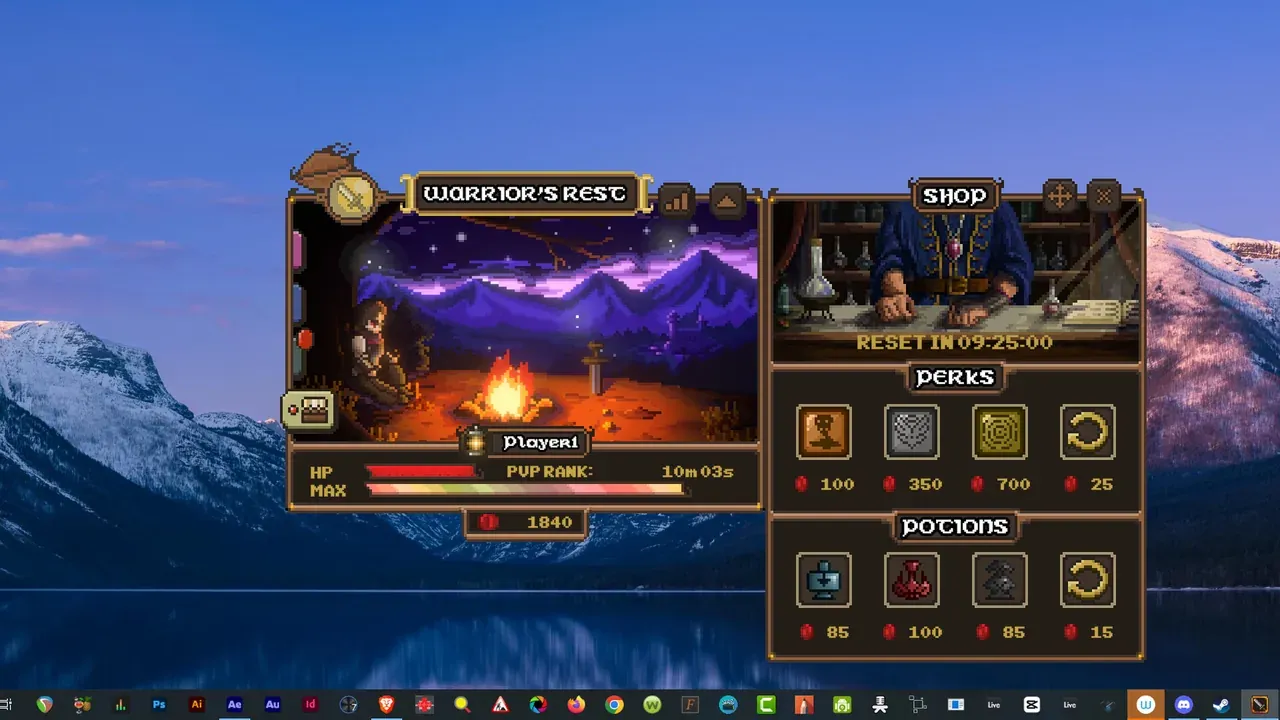
Bloodmarks are the only currency that matters in Lootborne outside of gold-tier gear drops. You earn them by breaking down equipment you do not want and by fighting PvP duels, and you spend them in one place: the shop panel at Warrior’s Rest.
The shop sells perks and potions on a daily rotation. That rotation is the reason you should arrive with a plan instead of buying the first thing you can afford.
Where Bloodmarks come from, and which source is better
There are two confirmed sources.
- Dismantling gear. The inventory has a bin tab next to the main tab. Moving unwanted items into it converts them into Bloodmarks. A hands-on write-up by Tpose Gaming measured roughly one Bloodmark per common item, and noted that better rarities may return more.
- PvP duels. The same write-up recorded 13 Bloodmarks for a win and 6 for a loss, and reported that friendly challenges through the friend system did not pay the same amount as random matchmaking.
If you are farming the currency specifically, random PvP is the better of the two, because a loss still pays. Treat the exact numbers as that author’s measurements rather than published rates, since balance patches can move them.
The shop resets daily, and rerolling costs Bloodmarks
The official screenshots show a shop panel with a countdown such as RESET IN 09:25:00, split into a PERKS section and a POTIONS section. In the build tested here, the perk positions were priced at 100, 350 and 700 Bloodmarks, and potions at 85 and 100.
Next to each section there is a reroll option priced at 25 Bloodmarks for perks and 15 for potions. So a reroll costs a quarter of the cheapest perk. Rerolling twice costs more than simply buying the cheap perk and moving on.
A sensible pattern: check the daily offer, buy the cheapest perk if any of the three fixes a real weakness, and only reroll if all three are useless to the build you are running.
Perk slots: the end state is five
The official achievement list includes an entry called Built Different, described as filling all five perk slots. That is the confirmed maximum.
Not all of those slots are open at once. The Tpose Gaming write-up reports that the second slot unlocks at level 10, which matches how the rest of the game gates its systems behind early progression. The unlock conditions for the remaining slots are not documented anywhere official, so they are unknown rather than hidden.
Because a slot you cannot use yet is not worth saving for, spend freely on the slots you do have. The currency comes back quickly, and a perk that keeps the hero alive pays for itself in stages you would otherwise have to repeat.
Perk effects are not the official 26
The Steam store page advertises 26 perks and 25 potions in the current version. Third-party data sites list more perks than that and describe their lists as extracted from game files, which may include retired entries.
This page sticks to the official count. The practical consequence is simple: if you see a perk list somewhere that is much longer than 26, it is not a list of things you can currently buy, and the difference has not been explained by the developer.
What kind of perk to buy first
Buy for survival, not for damage. Resting refills stamina but not health, so anything that returns HP during a fight extends how long a run lasts, and longer runs produce more loot.
Two effects stood out in testing:
- A heal-on-hit perk. The write-up names Crimson Vow, which restores 3 HP per attack for 180 Bloodmarks and visibly slowed health loss.
- A stacking crit perk. Each non-critical hit adds 10% crit chance up to 50%, resetting when a critical lands. This is a way to reach reliable crits without spending stat points on crit directly.
Both are examples of a perk changing the shape of a run rather than nudging a number. That is what you are shopping for.
Potions are the panic button, not the plan
The potion section sells consumables that tilt a fight you are losing. They are a useful backup when a random PvP opponent turns out to be stronger than expected.
They are also the worse long-term purchase, because they are consumed. A perk that heals on every hit keeps working forever. Buy potions when a specific fight keeps going badly, not as a routine upkeep cost.
Related reading
- Forge and dismantling for the other half of the decision about spare gear.
- Async PvP for how to actually earn Bloodmarks in duels.
- Beginning the game if you have not unlocked the shop yet.
Sources and limits
The shop layout, reset timer and price positions come from official Steam screenshots and the official release trailer. Bloodmark income, the level 10 slot unlock and the named perk effects come from a hands-on write-up by Tpose Gaming and are credited as such. Perk and potion totals come from the official Steam store page; higher counts published elsewhere are described by their sources as game-file data and are not used here.
Related reading
guide
Lootborne Beginner Guide: What to Do in Your First Hours
Clear the 30 stages of Outskirts, unlock Auto Fight, and learn what resting and dying do to your run in Lootborne. A practical opening plan.
guide
Lootborne Builds and Stats: There Are No Classes
Lootborne has no class or character choice. Builds come from stats, gear, elemental synergies and saved presets. Here is how each lever actually works.
guide
Lootborne Forge and Dismantling: What to Do With Duplicates
The forge turns spare Lootborne gear into higher rarities, dismantling turns it into Bloodmarks. Here is the four-step rule for deciding between them.